“Okay, Diva”: The Fulfilling Literary Life of Isabel Pabán Freed
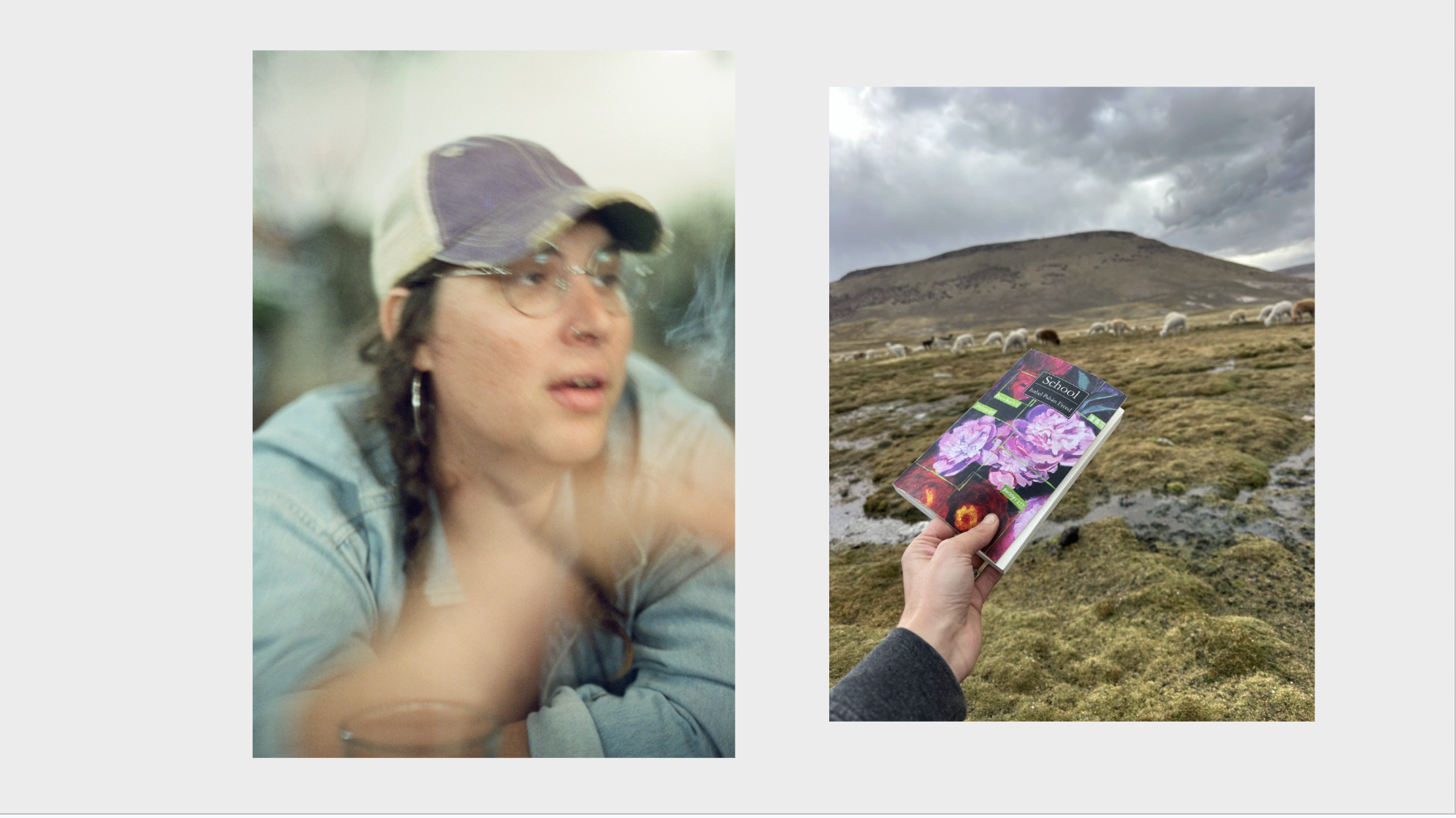
Isabel Pabán Freed doesn’t have an agent. She has never published with a major or small publisher. But physical copies of her books are stocked and sold at independent bookstores internationally. A paperback copy of her first novel, School (2023), “made its way through an entire Australian trans lesbian polycule,” Pabán Freed told me. How did this happen? The most important, most obvious answer is that Pabán Freed’s books are good; the Marx Bro answer, the one that zips straight to the means of production, is that Pabán Freed’s books are self-published.
Long-maligned as a “vanity project,” self-publishing has been on the rise since at least 2024. Authors can publish their creations on platforms like Inkitt, which uses AI to ghostwrite sequels for Galatea, its premium subscription app. Galatea’s novels frequently hit a million dollars in sales, and the company has raised a hundred million in VC funding. But while Galatea invests in popular genres like romance and fantasy, literary fiction, roughly two percent of the market, has not received the same attention.
Meanwhile, according to reporting from 404 Media, AI developer Amazon has trained its Large Language Models (LLMs) on “rare” books, which it bulk-buys and then destroys. “Rare” includes anything that is hard to find online and was produced outside the commercial literary market — including self-published texts. While book publishers and distributors often see these rare books as worthless, they’re valuable to AI developers, who want to train their LLMs on language produced pre-LLMs.
For Pabán Freed, however, the value of self-publishing is that it’s a way around commercial taste. Instead of haplessly ping-ponging between Big 5 presses and Substack, Pabán Freed, to quote a (self-published) essay, gets to be “a total cunt. I’m a diva! I do the things I want to do with my writing because why else bother?” Her essay is titled “The Fall of Isabel Pabán Freed.”