Who Gets to Make a Magazine in 2026?
When Pitchfork was acquired by Condé Nast in 2015, then-director of editorial operations Brandon Stosuy decided that this new direction would provide fewer opportunities for the kind of work that felt meaningful to him. It seemed “like suddenly things were going to change a lot. The magazine was going to leave our little warehouse in Greenpoint.”
Ten years ago, Stosuy ran into Yancey Strickler, then-CEO of the crowdfunding platform Kickstarter, at a coffee shop in Greenpoint. The chance encounter led to several conversations, and soon after, the pair launched The Creative Independent, an editorial platform funded by Kickstarter. On a nearly daily basis, the site publishes fresh content — interviews, essays, and guides — about what it means to be a working creative. Professional clowns, cookbook authors, product designers, figurative painters: if the domain exists, Stosuy has likely found a practitioner to share what they’ve learned, without a paywall.
“I wanted to create a resource that helped folks take control of what they do,” Stosuy said.
Currently, Stosuy is working on a creativity guide with North Point Press, an imprint of Farrar, Straus & Giroux, to be released in 2028. Over a few million people visit the site every year, and the daily newsletter reaches 65,000 people, according to Stosuy. His editorial duties range from managing pitches and editing to creating social media posts.
Stosuy is grateful for editorial freedom and consistent financial support. TCI’s entire operating budget is supplied by Kickstarter, which is itself a public benefit corporation. “[TCI] exists very separately,” said Stosuy, who is a salaried employee of Kickstarter. TCI also employs two freelance editors. “I’m probably one of the two or three longest-tenured people [at Kickstarter]. I just keep doing my thing,” he said.
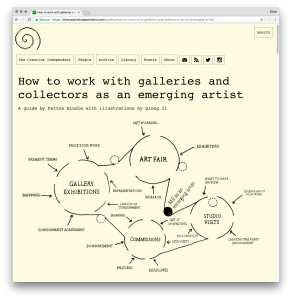
Image courtesy of The Creative Independent
The relationship between Kickstarter and TCI is symbiotic, according to Strickler. “We always saw TCI as a public resource, not a magazine.” From Kickstarter’s perspective, TCI is a way to further the company’s goal of advocating for the needs of artists. “By separating the brand entirely from Kickstarter, we thought it gave it a chance to be a genuine resource and not branded marketing,” he said.
As journalists grapple with fewer job opportunities and less stability, tech companies of different stripes, from dating apps to accounting tools for farmers, have launched publications as a way to connect with niche audiences. Three media workers who spoke to Study Hall said they’ve found success and fulfillment at these non-traditional outlets.

Image courtesy of The Creative Independent
The tech industry did not create the brand zine. Aramco World, the magazine of the U.S. subsidiary of the Saudi Arabian Oil Company, first appeared in 1949. The Italian fashion brand United Colors of Benetton published over 80 print editions of Colors between the early nineties and mid-2010s — and even Costco has a magazine, which runs checkout-line-style editorials on muscle stiffness and the history of Pokémon.