Digest 8/30/2021
Hot girl headlines, VICE Media layoffs, and more.
VICE & REFINERY29 EDITORIAL GETS GUTTED
On Thursday, VICE Media laid off 18 staffers, freelancers, and contract workers across editorial, per a statement from Vice’s Union. Vice laid off a significant portion of its senior editorial staff, and the Refinery29 cuts left at least one team without any writers.
At VICE proper, this included longstanding and senior editorial figures like life editorial director Casey Johnston, digital managing editor Meredith Balkus, editorial director of features Kate Dries, and editorial director of culture Leslie Horn Peterson. Also newly laid off are culture writers Josh Terry and Jelisa Castrodale, and staff writer Ashwin Rodrigues. A majority of the cuts were also made at my former employer, Refinery29, which was acquired by VICE Media Group in 2019 and had its workforce systematically slashed at least once a year since, and twice during the pandemic. This most recent round of layoffs included entertainment writer Natalie Morin, senior entertainment writers Anne Cohen and Ariana Romero, lifestyle editor Olivia Harrison, lifestyle writer Michelle Santiago Cortés, senior news editor Leora Yashari, and her team of trending news writers Asia Ewart, Danielle Campoamor, Lydia Wang, and Erin Corbett. Three of the eliminated employees from VICE and Refinery29 were reportedly on maternity leave.
These cuts seem to be making good on VICE’s promise to cut “text-based” articles by 40%, an announcement that caused internal confusion among employees when it was slipped into a New York Times interview last month.
One Refinery29 employee told me on Friday, “I always feel like I’m grieving after a big layoff but this one feels fucking disorienting. I don’t know what we make anymore or where we’re going. A lot of managers cried in our meeting with [VICE Media chief digital officer] Cory [Haik] yesterday because they felt so out of the loop.”
The employee added that they “don’t think there’s any vision for the future right now.”
“They told us that they wanted our input on what the future looks like, but I don’t get paid enough to figure out how we go on without smart, talented, hardworking people that I didn’t choose to abandon.”
Media Twitter was incensed that the only acknowledgement of this destruction appeared in the twelfth paragraph of a buzzword-filled email that also contained the sentence “Congrats to VICE Indonesia for hitting 1M subscribers on TikTok this week!” The email was written by VICE Media chief digital officer Cory Haik, who was the publisher at Mic during its disastrous pivot to video which resulted in almost the entire staff being laid off before what remained was sold to Bustle Digital Group.
In addition to these cuts, the news dropped on Thursday that VICE’s headquarters would be moving from Williamsburg to Dock 72 in the Navy Yard. The Real Deal notes that “brokers who attended a recent event there said it took them over an hour to get there from Midtown, including the ferry ride.”
HOT GIRLS HATE THIS ONE HEADLINE TRICK
This week, we learned hot girls are drinking whole milk, thanks to an article by Emily Sundberg in GrubStreet. Last month, hot girls were all about tinned fish, while at the same time suffering from IBS. Maybe it’s all the milk?
This headline was one hot girl too many, prompting much discourse about the lifecycle of the term. My Study Hall predecessor, Allegra Hobbs, pointed out on Twitter that the pop culturification of “hot girl” started with Megan Thee Stallion’s song “Hot Girl Summer,” but became prescriptive with the #HotGirlsForBernie hashtag. Not to plug myself, but this summer, a “hot girl summer” on TikTok meant doing your laundry and drinking enough water. Now we’ve arrived here, where “hot girl” has completely lost all meaning; These stories don’t tell us anything about girls who are hot. They do tell us, however, that media outlets have found a new headline structure to beat to death.
In 2018, I wrote a story that my editor titled “This Is How You Ex: Lady Gaga’s Former Fiancé Raves Over A Star Is Born.” It did insanely well, traffic-wise. We went on to write thirteen more stories using that same headline construction — “this is how you ex” — because for some inexplicable reason, headlines with that phrase never failed to perform.
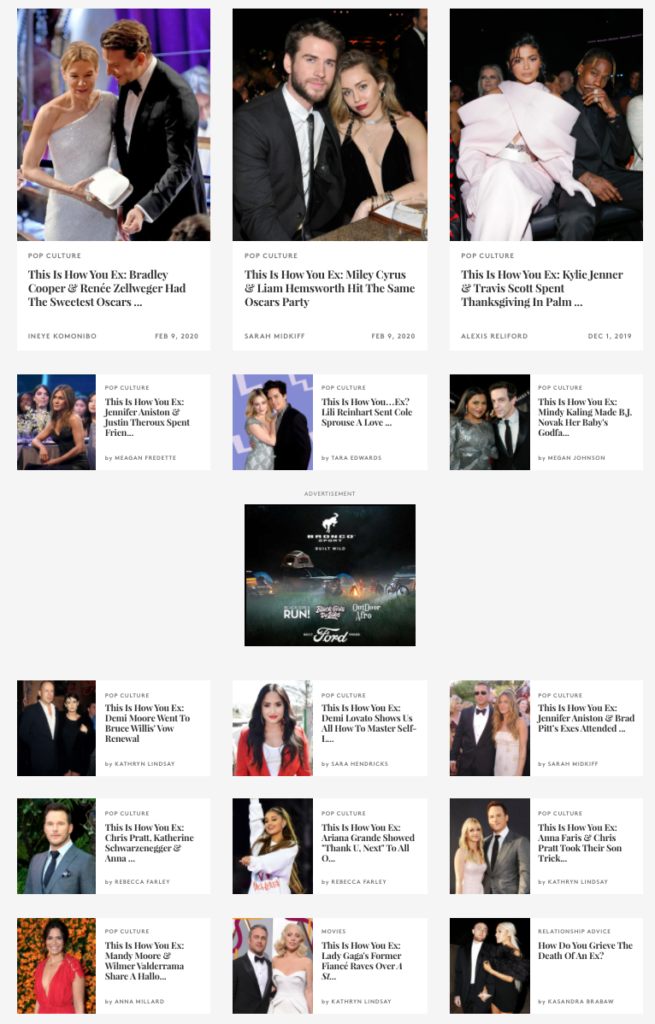
So many hot girls, not enough headlines.
I wish I could share this anecdote with the TikTok user who mocked tech columnist Jason Aten for a similar reason. In a Tweet, Aten revealed he wrote 900 articles over the last 700 days for Inc.com — a staggering cadence. TikTok user @1i1i1ii11 screenshotted the tweet and pointed out that many of those 900 articles used the same phrase: “Emotional Intelligence.” (This was also noticed by Casey Toner on Twitter.)
“People Were Upset Over Amazon’s New App Icon. The Company’s Response Is A Brilliant Example of Emotional Intelligence.” “Ford CEO’s 1-Word Tweet in Response to Elon Musk Is The Best Example of Emotional Intelligence I’ve Ever Seen.” “SpaceX Just Blew Up a $200 Million Rocket. Elon Musk’s Response Was a Brilliant Example Of Emotional Intelligence.”
Do I, personally, love headlines that cheer on companies like Amazon and tech moguls like Elon Musk? No. But I do feel a need to defend Aten on the thing people are clowning him for: the repetition of “emotional intelligence.” Its prevalence among Aten’s headlines — which, let’s note: the writers of stories often do not come up with their own headlines — doesn’t mean Aten was weirdly, obliviously obsessed with this term. It’s much more likely that Inc found that including the term in their headline resulted in increased clicks. When you’re thinking about SEO or trying to scrape Twitter and Facebook clicks, you’re not anticipating repeat users.
A page of the same headline fourteen times in a row does look absurd, but when a term suddenly starts appearing all over the place — “emotional intelligence,” “cheugy,” or “hot girl” — it means more readers than usual are clicking on it, and editors noticed. There’s hardly ever a sure bet in media, so when someone finds one, can you blame them for taking it?
COMINGS AND GOINGS
— Zeynep Tufekci has joined The New York Times as an opinion columnist.
— Aiyana N. Ishmael joined Teen Vogue as editorial assistant.
— M.H. Williams left PC Mag to join Fanbyte Media.
— Alessandro Fillari left GameSpot to join CNET as editor.
— Erica Gonzales departed Harper’s Bazaar after five years to join Elle Magazine as senior culture editor.
— Meg Graham joined The Wall Street Journal to cover advertising and marketing.
— Jessica Cruel has joined Allure as editor-in-chief.
— Lucy Diavolo is departing as Teen Vogue’s news and politics editor.
— Evette Dionne is leaving Bitch magazine after three years as editor in chief.
EVERYTHING ELSE
— Vox Media has acquired Punch, an online magazine about cocktails. Punch will become a sister site to Eater. This is yet another acquisition by Vox, which acquired New York Mag back in 2019 and the podcast Waveform earlier this month.
— MSNBC employees successfully voted to unionize with the Writers Guild Of America, East in a NLRB election. The union spans 300 writers, producers, and fact-checkers, and luckily there’s certainly no trouble or tension plaguing the WGAE right now. Just kidding.
— The WGAE website was down for an hour on the first day of voting in the council election that is make or break for digital media companies at the Guild. Many found that their votes did not go through, so consider this a PSA to check on yours as well.
— Local news outlet Bklyner plans to stop publishing on September 10 after almost ten years.
— Sarah McNally, owner of McNally Jackson Books, has launched a publishing arm, McNally Editions, which will be distributed under Simon & Schuster. The imprint is, however, welcoming former Paris Review editor Lorin Stein as general editor; Stein resigned from the Review in 2017 during an internal investigation into his behavior toward female employees and writers.
— Rachel Maddow is being paid more money to do less work — the dream.
— An unnerving tweet.
Subscribe to Study Hall for Opportunity, knowledge, and community
$532.50 is the average payment via the Study Hall marketplace, where freelance opportunities from top publications are posted. Members also get access to a media digest newsletter, community networking spaces, paywalled content about the media industry from a worker's perspective, and a database of 1000 commissioning editor contacts at publications around the world. Click here to learn more.