Digest 11/9/2020
When to call an election, social media misinformation, strife at the New York Times, and more.
WHY MEDIA CALLED THE RACE SO LATE
Media consumers and purveyors alike were becoming antsy when, late into the week, results that seemed increasingly decisive still had not led to the election being called for president-elect Biden. Some critics worried that waiting to make the call gave more air to Trumpian conspiracy theories and misinformation around the election’s legitimacy. “I don’t know, but it sure seems to me like not calling the race when the outcome is obvious in states like PA and NV gives the president more time to spout misinformation,” tweeted Nate Silver.
But calling the race for Biden hasn’t dissuaded Trump’s unhinged tweeting; it also hasn’t convinced his supporters that he has decisively lost the race. And it also doesn’t seem like networks and publications were holding off on making the call out of deference to Trump or mindfulness of his response (though it certainly added to the tension around possibly making a wrong call). Rather, per the Washington Post, the unusual pandemic-era election circumstances made the actual counting of votes more difficult. With so much uncertainty, outlets wanted to exercise an abundance of caution in making any declarations.
“This is very much the axiom that you learned at J school — you want to be fast, but you want to be really sure you’re right,” said Rick Edmonds, media analyst at Poynter. Projecting what is likely to happen and “making the call” to declare a winner, he added, are two different things.
When the call was made on Saturday morning by CNN, every other major network – CBS, MSNBC, ABC, NBC — announced a Biden win within minutes. All these networks are part of a consortium that relies on the data firm Edison Research to make race calls. (Both Fox News and AP pulled out of the consortium that uses Edison Research, which relies on exit polls, instead opting for a University of Chicago-affiliated research operation — this is why AP and Fox called Arizona earlier than other sources.)
The announcement led to literal dancing in the streets, pot-banging, popping champagne, and tears of joy. Such celebration spoke to the power of the media call: We had a pretty good idea days before the president-elect would most likely be Joe Biden, but despite Trump questioning the ability of the “lamestream media” to decide elections, the call made it real enough to celebrate. “The media is the medium through which people learned and accepted this,” observed Edmonds. “And maybe it’s little bit of a counter narrative to ‘nobody believes the media.’”
Of course, let us not forget that Pop Crave had already called the race two days earlier.
HOW SOCIAL NETWORKS HANDLED ELECTION MISINFORMATION
Twitter and Facebook — already contending with spotty reputations when it comes to clamping down on conspiracy theories, hate speech, and misinformation on their platforms — moderated content more aggressively in the days leading up to the presidential election and throughout that week. Facebook shut down a “Stop the Steal” group with a membership of over 365,000 that alleged election fraud (though other groups sprung up in its place). Twitter removed fake accounts aimed at spreading disinformation about the election, and flagged a significant chunk of Trump’s tweets as disputed. It was the kind of decisive action against dangerous content that watch dogs had been imploring the social networks to implement long before now.
The New York Times’ Kevin Roose observed that these platforms were successful in removing misinformation by undermining the key features of their technology. Facebook subverted the “frictionless” design for users and ad buyers to create a lot more friction for political advertisers, instituting a more involved approval process, and deactivated its recommendation algorithm for private groups that could encourage violence and unrest. “It’s a telling act of self-awareness, as if Ferrari had realized that it could only stop its cars from crashing by replacing the engines with go-kart motors,” wrote Roose.
Of course, the implication here is that if Facebook and Twitter can do all these things around an election, they can do it, to some degree, all the time — the threats of white supremacy, climate change denial, and literal fake news on the platforms are not going away. I think it will be difficult for the tech giants to revert to business as usual and avoid responsibility for the content shared on their platform after their actions during the election, but I also don’t see them making significant structural changes without intense public pressure or even governmental oversight.
LONGREAD OF THE WEEK Reeves Wiedeman has been publishing a series of masterful features for New York Magazine on the media industry, taking on individuals and institutions alike. His latest is a deep, spelunking dive into the future of the New York Times.
According to Wiedeman’s report, the NYT benefited enormously from Trump’s presidency, though editor Dean Baquet always tried to brush off the oppositional role. Yet Wiedeman frames its internal conflict as “institutionalists” versus “insurrectionists” — the old guard who have done their time at the Times and want it to stay seemingly “objective” and the new guard of digital-first journalists pushing it to diversify at the highest levels.
The NYT’s vaunted neutrality is shown increasingly clearly to be a myth of whiteness, Wiedeman writes: “The view from nowhere was actually too often a view from the Upper West Side and Montclair, New Jersey.” The feature is very long, so here are some bullet points:
- The paper earmarked an extra $5 million to cover the Trump administration in 2017
- 40 percent of newsroom employees hired since 2016 have been people of color
- NYT stock is up by a multiple of four since Trump took office
- All the drama happens in a Slack channel called #newsroom-feedback
- NYT engineers and developers are also “techsurrectionist,” pushing for newsroom policies that speak to its mission
- One mystery op-ed columnist is still afraid: “As long as Twitter is editing this bitch, you cannot promise me anything.”
— Kyle Chayka
EVERYTHING ELSE
— Naturally, not everyone was thrilled with Twitter’s decision to label tweets by the president as potential misinformation. Brian Kilmeade encouraged Trump to abandon Twitter altogether and take his followers with him. Sounds like a dream come true, but where should they go? Make MySpace happen again!
— Here’s the inevitable report on the “chartthrobs” you were all thirsting over throughout election week. Personally I was just concerned about Steve Kornacki’s health and well-being, as he was being lauded for having slept only five hours between Election Day and Saturday. Let the man take a nap!?
— After two years under the Japanese public company Uzabase, Quartz CEO Zachary Seward has announced he bought Quartz himself and is taking the company private. The rest of the Quartz staff will have equity in the company, he said. They’re also currently fundraising to support the venture and are in the midst of a membership drive.
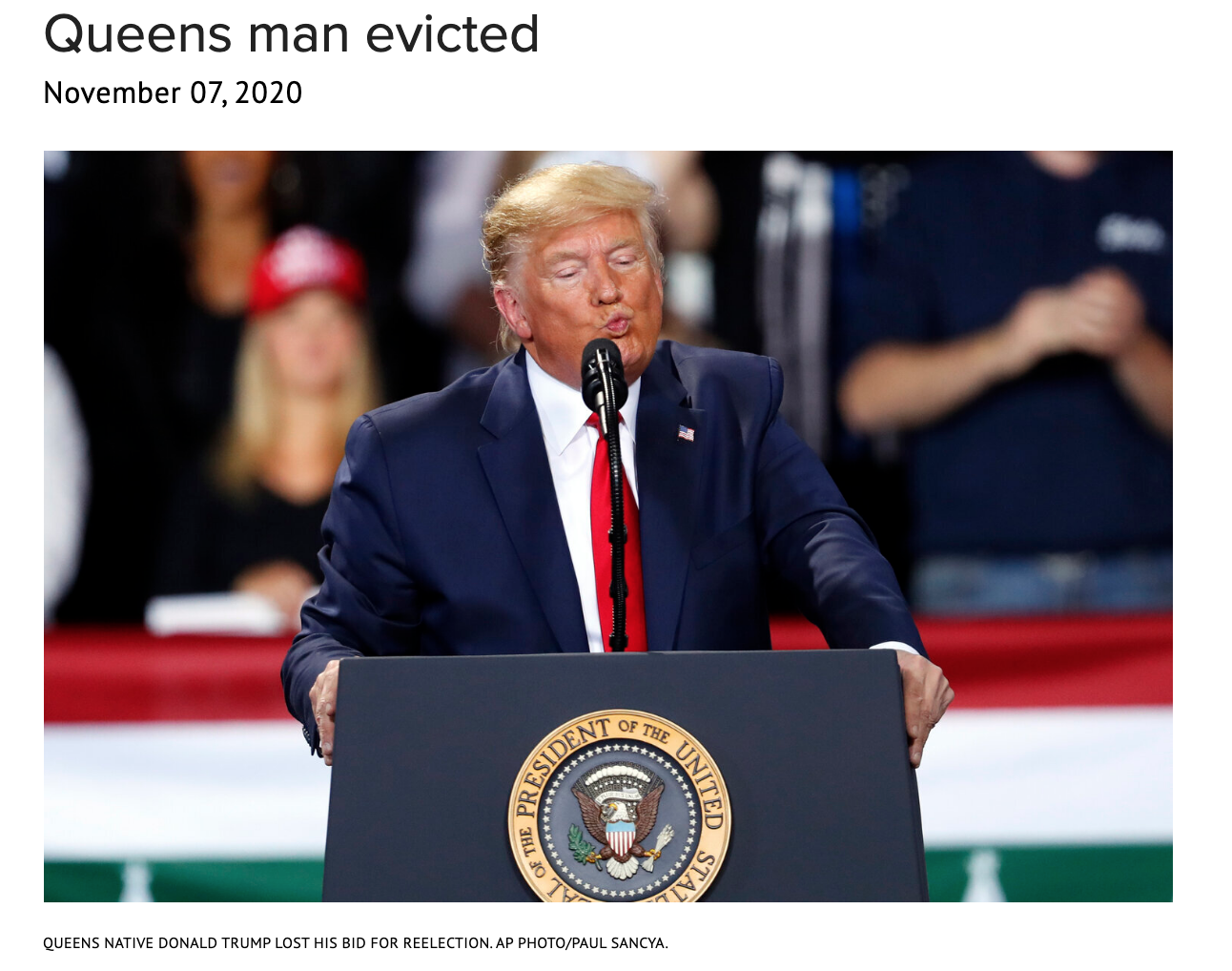
— Local news remains unmatched. Here’s the Queens Daily Eagle’s take on the election results:
Subscribe to Study Hall for Opportunity, knowledge, and community
$532.50 is the average payment via the Study Hall marketplace, where freelance opportunities from top publications are posted. Members also get access to a media digest newsletter, community networking spaces, paywalled content about the media industry from a worker's perspective, and a database of 1000 commissioning editor contacts at publications around the world. Click here to learn more.