Digest 3/29/2021
A Medium amount of hellishness, YouTubers exposed, stalking boats, and more.
This week, to give staff writer Allegra Hobbs a break, the Study Hall editorial team has filed dispatches from their respective corners of media. Featuring Kyle Chayka on NFTs, Vicky Mochama on boat stuff, Chris Erik Thomas on Paramount Plus, and Erin Schwartz on YouTube drama.
MEDIA HELL WEEK, AGAIN
Not to be negative, but it seems the media industry is continuing to crumble beneath our feet. On Tuesday, Medium CEO and Twitter co-founder Ev Williams sent an email offering buyouts to Medium’s editorial staff, explaining that he no longer believes in publications and therefore would be shifting the platform away from professional journalism (this all comes after a union-busting campaign by Medium leadership). “Trust is more important than ever and well-established editorial brands still have meaning,” Williams wrote. “But today, credibility and affinity are primarily built by people — individual voices — rather than brands.” Call it the Substack effect, or the writer as influencer effect. Why go to the trouble to power a whole publication when one single asshole with a blog can outearn a publication by an absurd amount?
Then, on Wednesday, MEL Magazine Editor-in-Chief Josh Schollmayer announced that the Dollar Shave Club was severing its relationship with the magazine, ending publication of MEL immediately and leaving many staffers jobless. MEL is looking for a new owner, but it seems doubtful we’ll see all those journalism jobs restored. Maybe our only hope really is to demand attention on Twitter, then somehow convert that attention to paid subscribers on a newsletter platform. Except that sounds like hell on earth. There is one more option, and that is to get a job at the New York Times — they’re thriving! Good for them. We’re very happy for them. — Allegra Hobbs
NFT STANDS FOR “NEW FYORK TIMES”
An artist named Beeple sold a JPEG for $69 million at Christie’s the other week. What he really sold was a “non-fungible token,” essentially a blockchain-based collector label that allows the buyer to say, “I own this JPEG.” Since then, the New York Times has sold an NFT of a column for over $500,000, and Time sold three cover NFTs for nearly the same. A new business model for media: Commodify your brand assets for tons of crypto-money!
While the NYT column was more of a stunt — the proceeds went to charity — Time certainly sees NFTs and cryptocurrency as the future of media, as Yahoo reports. (Time is owned by the tech billionaire Marc Benioff.) The huge sale numbers and headline hype make it seem vaguely possible: Could selling limited edition NFTs fund more journalism, even to the tune of a few million dollars a year? My pessimistic take on this is that Time and NYT are just selling very fancy souvenirs; the novelty is what makes them valuable. The tokens are reaching crazy prices because cryptocurrency values have boomed during the pandemic and the crypto-wealthy have few places to spend money.
Yet there are also some reasons to be optimistic. The NFT sales show that digital assets have value — people will spend money to feel closer to an artist or brand, like buying a signed hat with a logo. I don’t think digital tokens are actually worth millions, but small-scale tokens could play an interesting role for communities of readers or subscribers. Imagine bits of digital swag on NYT Cooking profiles or pixelated prizes on the Crosswords app; similar to Twitch, you could even pay to promote your comment on an article with a badge, and display how many badges you’ve bought.
Most NFTs are just bragging rights, but in some cases you do want to brag about your media allegiances. An organization called Friends With Benefits literalizes the allegiance mechanism by basing its digital community on a bespoke cryptocurrency, $FWB. Only buyers of the currency are allowed to participate in the community. But these setups can also resemble pyramid schemes — who can say if the value will last? — Kyle Chayka
BIG, BEAUTIFUL BOATS
Like a doodle on a seventh grade math test, the Ever Given cargo ship allegedly sketched a big D and booty on the water before it sailed to a hard stop in the Suez Canal’s southern bank, blocking traffic for six days. Not since Boaty McBoatface has a vessel so captured the world’s attention. Those sexxxy visuals came courtesy of VesselFinder, which is one of a handful of open-source services that track and map the movements of vessels on the water using the maritime Automatic identification System, or AIS.
Open-source ship-tracking services and I are old friends; whenever an oligarch or a celebrity has a Daily Mail trail, or an Instagram post on a yacht, I turn to my favorite, Marine Traffic, to check out the boat and see how much wealth I don’t have. There’s a Sims-like quality to clicking onto any ship and seeing all its data. Music producer David Foster posted on Instagram that he “sure had a great time!!” on a borrowed boat last year, and with a little sleuthing and a confirmation from the ship’s AIS beacon, I identified it as American billionaire Dennis Washington’s Attessa IV, which has been having a rollicking good time around the Baja Peninsula.
Most of the journalist queries that AIS sites like Marine Traffic field are inquiries related to superyacht travels or corporate shipping, but this week, they’ve gone from fielding “about 15 requests” per week, says Georgios Hatzimanolis, Marine Traffic’s spokesperson, to 60 per day this week. “Most journalists are, at this stage (two days later), looking to see how it’s going to affect global trade,” he says. they’re looking for data on which ships are redirecting to go the longer way around the Cape of Good Hope and which ones are stuck waiting in the Suez. Bigger institutions, like the New York Times, the Wall Street Journal, and the Washington Post, are looking for macro data, while smaller outlets are narrowing their focus and looking for single ships that can tell a more localized story. (Marine Traffic is happy to pull data for any students or freelancers too, FYI.)
But AIS has its limits. Ships can turn off their transponders or move them onto another ship, as ships heading to North Korea to deliver oil have done. People doing crimes really don’t like being followed. And GPS and AIS are like any signals: they’re susceptible to manipulation, interference and technical failure. Still, you can’t hide a big friggin’ boat no matter how hard you try. And the Ever Given, bless her heart, is finally free. — Vicky Mochama

All marine tracking memes are good memes. Source: @chelsesaurusrex.
CHRIS’S MOM ENDORSES PARAMOUNT PLUS
My mom still rents movies from Redbox kiosks and bought an iPad to watch her soap operas. She is far removed from the pop culture discourse over what streaming service’s show or movie is trending; hers is a more peaceful world where the only drama comes from episodes of television shows that, in some instances, have been on the air longer than I’ve been alive.
She is the last person I’d ever expect to talk about a new streaming service. But last week, over FaceTime, my mom informed me that she had started a free trial of Paramount Plus because her soap operas had moved on to the platform. Paramount Plus, for those who missed it, is the streaming platform formerly known as CBS All Access that launched on March 4. It has live TV packages; back catalogues of Nickelodeon, MTV, BET, and Comedy Central shows; and, eventually, will host “original programming,” which is code for new iterations of classic shows like Frasier, Rugrats, and [Ed. note: this is real] Beavis and Butthead.
“Why would you sit on all this archive and not try to create a new revenue stream out of it?” Bluenn Le Goffic, VP of Strategy of Business Development for Accedo.tv, said to Study Hall. It only takes a brief look at TikTok teens cosplaying as 2000s-era emos or the unbreakable love people still hold for Friends to see that nostalgia is big business. At least for now, Paramount Plus doesn’t need to spend billions producing original programming that will be buried under an avalanche of similar shows the minute it’s uploaded. They launched with a catalog of more than 30,000 episodes, 2,500 movies, over 1,000 live sporting events, and 24/7 news stations.
Of course, that will change: Its slate of original content includes a series based on the Halo video games and whatever the creators of Avatar: The Last Airbender come up with. But at least for now, it’s a soothing, nostalgic balm for moms who want the daily drama of their soap operas and anyone over the age of 25 who wants to play old TV shows from their childhood in the background as they dissociate from the modern world. — Chris Erik Thomas
EXPOSED, EXPOSED, EXPOSED
On March 16, Insider published a piece by Kat Tenbarge detailing a sexual assault allegation involving Durte Dom, a former member of popular creator David Dobrik’s Vlog Squad; the article also implicates Dobrik and other members of the squad in creating an environment that facilitated the assault. In the past, reports like this — notably Tenbarge’s exposé of beauty influencer Jeffree Star’s history of assault and hush money payments — haven’t always captured the attention of YouTube’s robust commentary community, allowing their subjects to ignore the allegations.
That was not the case with the Vlog Squad story. It was quickly picked up by the H3 Podcast, a popular channel run by Ethan and Hila Klein generally seen as a credible source for internet news, and their spinoff Frenemies podcast, hosted by Ethan Klein and YouTube’s chaotic seer Trisha Paytas. Other channels followed. Per YouTube conventions, the scandal produced related, secondary scandals: Jeff Wittek, a source briefly named in the article, posted clips of a secretly recorded conversation with Tenbarge, which she responded to by posting her own recordings. (A day later on an emergency episode of the Frenemies podcast, Wittek admitted that he had only read the sections of the article containing his name; late last week, he deleted the video and apologized.) Dobrik himself has lost brand deals, and his YouTube channels have been temporarily demonetized.
The episode shows positive signs of traditional media and the YouTube commentary world converging. For weeks before Insider’s report, Klein and Paytas had shared stories about Vlog Squad misconduct, creating the conditions for a report about the massively popular group to succeed; Tenbarge, with the resources of Insider behind her, was able to produce a story with depth and accuracy difficult to match as a solo creator. Even bizarre criticism from Wittek that Insider’s paywall meant that Tenbarge was motivated by “[her] own personal profit” (not how journalism works; I wish the money from the Study Hall paywall went directly into my pocket!) was neatly batted down by the drama channel Tea Spill.
The more creators and journalists understand each other’s work, the better. As New York Times reporter Taylor Lorenz said on an On the Media episode about the scandal, “[the creator economy] is a completely unregulated industry. I cannot express how unregulated it is.” But there are plenty of people within it who are trying to make sense of it, from the inside and outside. It’s good when they find each other. — Erin Schwartz
COMINGS AND GOINGS
- Priya Krishna, who left Bon Appétit last summer, is joining the crew at the NYT Food section.
- Michael Tomasky is taking the helm at the New Republic to navigate it into more boring seas.
- After a few weeks choppy waters departures-wise, The Paris Review has landed a new editor in Emily Stokes.
- The great Medium buyout begins with editors (One Zero’s Damon Beres, MRKR’s Jean Luc Bouchard) and writers (Will Oremus, Andrea Gonzalez Ramirez, Emily Mullin) sailing into the open seas of media.
EVERYTHING ELSE
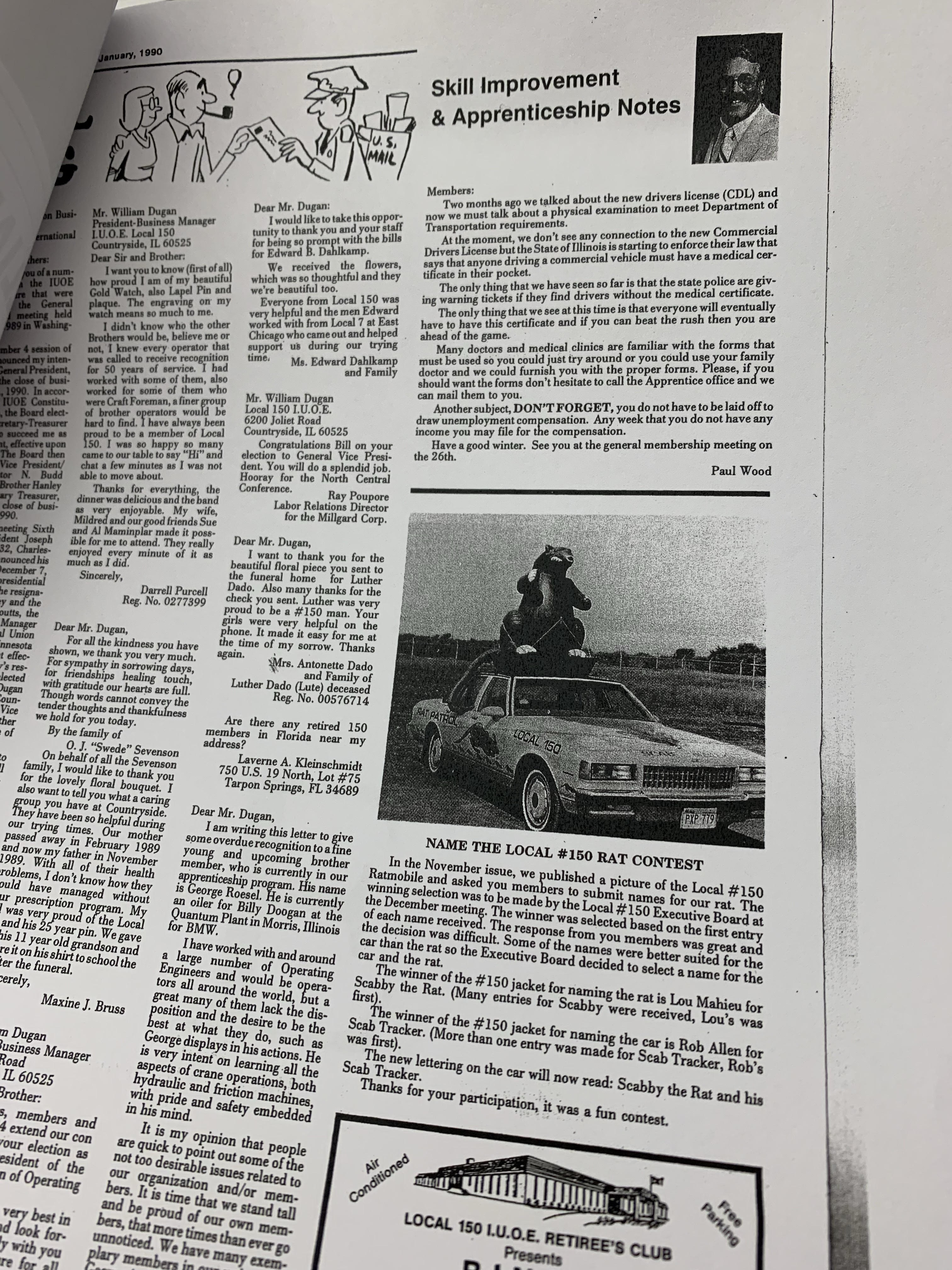
- The unions at three Condé Nast publications — The New Yorker, Ars Techinca, and Pitchfork — have voted to authorize a strike over a lack of progress in negotiations with the magazine company. In a statement released Friday, the unions describe Condé “not negotiat[ing] in good faith” and showing up to sessions “late and unprepared.” If there’s a strike, I hope Scabby makes an appearance outside Content Tower!
- Glenn Greenwald has used his platform to harass USA Today investigations intern Brenna Taylor on her first byline at the publication, a piece on Capitol rioters fundraising online to pay legal fees. Her colleagues at USA Today tweeted their support, but Greenwald’s ire is becoming a genuine occupational hazard for women in tech reporting.
- Indian Country Today has become an independent media company, splitting from the National Congress of American Indians, its previous owner. The new company is currently awaiting approval for 501(c)(3) nonprofit status.
- Wyoming-based Swiss billionaire Hansjörg Wyss has joined the bidding for Tribune Publishing, the owner of the Chicago Tribune, the New York Daily News, and the Baltimore Sun, a move that could block venture capital firm Alden Capital from acquiring full ownership of the company.
- In an incredible misapplication of journalism ethics guidelines, Felicia Sonmez, who has spoken about being a survivor of sexual assault, revealed that she was barred from covering #MeToo and sexual misconduct for the Washington Post.
- New York has reached a deal on legalizing recreational marijuana, just weeks after a similar bill went into effect in New Jersey. This isn’t media news, I’m just excited.
Subscribe to Study Hall for Opportunity, knowledge, and community
$532.50 is the average payment via the Study Hall marketplace, where freelance opportunities from top publications are posted. Members also get access to a media digest newsletter, community networking spaces, paywalled content about the media industry from a worker's perspective, and a database of 1000 commissioning editor contacts at publications around the world. Click here to learn more.